











Origami Marketplace is a French SaaS solution that enables companies to build and operate their own marketplaces: B2B, e-procurement, service platforms, and digitalization of reseller networks.
The platform now supports national sports federations, mutual insurance groups, industrial groups, and leaders in their respective sectors.
Behind this mission, the company aims to transform often complex transactional models into smooth, high-performing and scalable experiences.
An initial architecture reaching its limits
In its early days, Origami Marketplace relied on public cloud infrastructure at OVHcloud, with a dedicated environment per customer.
A simple and effective model to get started, but one that gradually showed its limits as the business grew.
Every new customer meant deploying a whole new platform. Costs rose mechanically, management became more complex, and the ability to scale became more limited.
On the team side, the challenge was just as significant, with more and more time spent on operational tasks (certificate management, incidents, maintenance…) at the expense of their core business.
Every new customer meant one more environment to maintain. For a growing company like ours, with customers whose usage was becoming increasingly critical to their business, we could feel that the model needed to be optimized. Our teams were spending a growing amount of time on operational topics instead of focusing on the product.
A desire to regain control over the infrastructure
Faced with these limitations, Origami Marketplace decided to evolve its model to gain more control and efficiency.
The goal was clear: industrialize the infrastructure to support growth without adding operational overhead.
In practice, this meant:
- Better control and predictability of costs
- More automation in deployment processes
- A platform capable of scaling and performing more simply
- Less dependency on system administration tasks
Shifting to a shared platform model
After an initial scoping phase, a new architecture was defined together with the Enix teams.
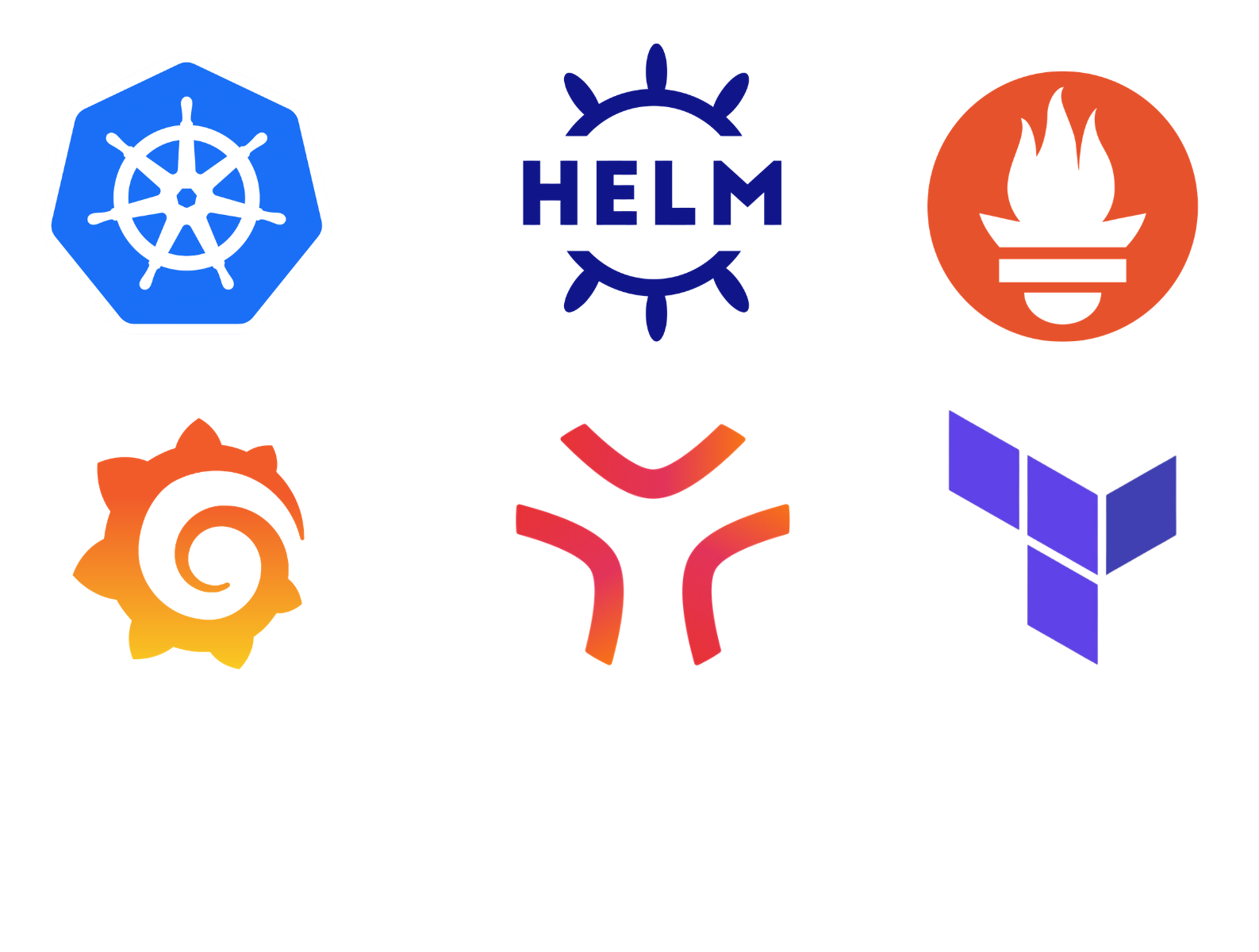
It relies on dedicated virtualized infrastructure (Proxmox) deployed on OVHcloud bare metal machines, on top of which two Kubernetes clusters were built: one for development, one for production.
The real change lies in the approach, which became shared. All customers are now hosted within a single production cluster, with shared and optimized resources. This moves away from the “1 customer = 1 platform” model, which had until then limited the platform’s scalability.
This new architecture makes it possible to industrialize the hosting of customer environments within a unified Kubernetes platform, while still guaranteeing data and resource isolation.
This shift marks the transition from a “1 customer = 1 platform” model to a more scalable, optimized, and simpler to operate approach on a daily basis.
Managed services operated through Kubernetes operators also complete the platform, automating and simplifying the deployment of new customer environments.
The move to a platform that is both shared and isolated was a real turning point. Shared, to decouple our growth from the number of environments to manage; isolated, to maintain strict data governance for each customer. We won on both fronts: scale and security. Onboarding a new customer became a smooth process, no longer an infrastructure project.
A gradual transition, without disruption
The new infrastructure was rolled out in summer 2022.
Origami Marketplace was supported in getting up to speed with the new tools, particularly the operators, with the goal of quickly gaining autonomy.
Already familiar with application deployments and cloud native technologies, the teams quickly built up expertise, which made the transition to this new, more industrialized model easier.
Customer migration was carried out gradually, ensuring service continuity while switching over to the new platform.
By the end of the migration, the platform relies on highly available database services, deployed and operated directly within Kubernetes.
A platform that keeps evolving
Once in place, it was important for our teams to make sure the platform evolves at the pace of Origami Marketplace’s needs.
In recent years, several areas have been addressed to meet this goal:
- Modernization and extension (3 years later) of the virtualization cluster, with operations carried out live
- Gradual migration toward our software standardization
- Strengthened security with the adoption of an immutable OS (Talos)
- Improved monitoring and observability of the platform
Continuous, proactive improvements, helping to maintain a high level of performance, security, and reliability.
Tangible benefits day to day
Today, Origami Marketplace relies on a more robust, more flexible, and better-sized platform for its business.
This translates into:
- Controlled and more predictable costs
- Higher workload density thanks to better resource allocation
- The ability to scale without a spike in costs
- Significant time savings on the rest of the core business operations
As well as close collaboration with our Enix experts, built around a long-term partnership.